

Miami does something to the way people relate to their homes. Maybe it’s the light, or the fact that the weather genuinely cooperates for most of the year. Whatever the reason, backyards here carry a different kind of weight than they do in most other American cities, which means if you’re building or reworking a home in South Florida, the outdoor living spaces in Miami aren’t something to sort out after everything else is done.
It might actually be the most consequential part of the whole project. This piece walks through what actually works, pool decks, covered kitchens, and entertainment zones, drawing on how experienced Miami custom home builders approach these decisions from day one.
The Pool Deck Is Where It All Starts
In Miami, the pool is more or less assumed. The deck around it, though, is where you either get the outdoor living space right or you don’t.
Material selection is more significant here than most people realize until they’re standing on dark concrete in July with bare feet. Travertine is popular for a reason; it stays noticeably cooler underfoot than poured concrete under direct sun. Porcelain pavers are denser, absorb almost no moisture, and hold up well in South Florida’s humidity cycles. Both are practical, not just pretty.
The bigger mistake is ignoring shade when planning the deck layout. A completely exposed pool deck in Miami becomes unusable by around 11 in the morning for a good portion of the year. Extending one side under a pergola or partial roof structure changes the whole equation. You get a transition zone, somewhere to actually sit without roasting, and the deck becomes a place people want to spend time rather than avoid.
Outdoor Kitchens: Not Optional, Not Seasonal
This is the point where outdoor living space ideas in Miami genuinely part ways from what makes sense in cooler climates. Outdoor kitchens in South Florida aren’t an upgrade. Their infrastructure is used in January as much as in June.
A well-executed outdoor kitchen has a built-in grill, burners, an outdoor-rated refrigerator, and counter seating. More importantly, it has a roof over it. Shade protection isn’t about comfort alone; stainless steel appliances degrade considerably faster in uncovered South Florida sun and rain. The structure itself, whether it’s a pergola with shade sails or a solid hip roof that reads like part of the main house, should feel like it belongs. If it looks bolted on, the whole space suffers for it.
Contractors offering new home construction services in Miami generally rough in the gas lines, electrical, and plumbing for outdoor kitchens during initial construction. Retrofitting all of that later costs significantly more and involves more disruption.
Defining Zones in the Entertainment Area
Outdoor entertainment areas in Miami tend to fail not because of bad materials or bad plants, but because of a lack of structure. An open slab with furniture scattered on it isn’t an outdoor room. Zones are what turn it into one.
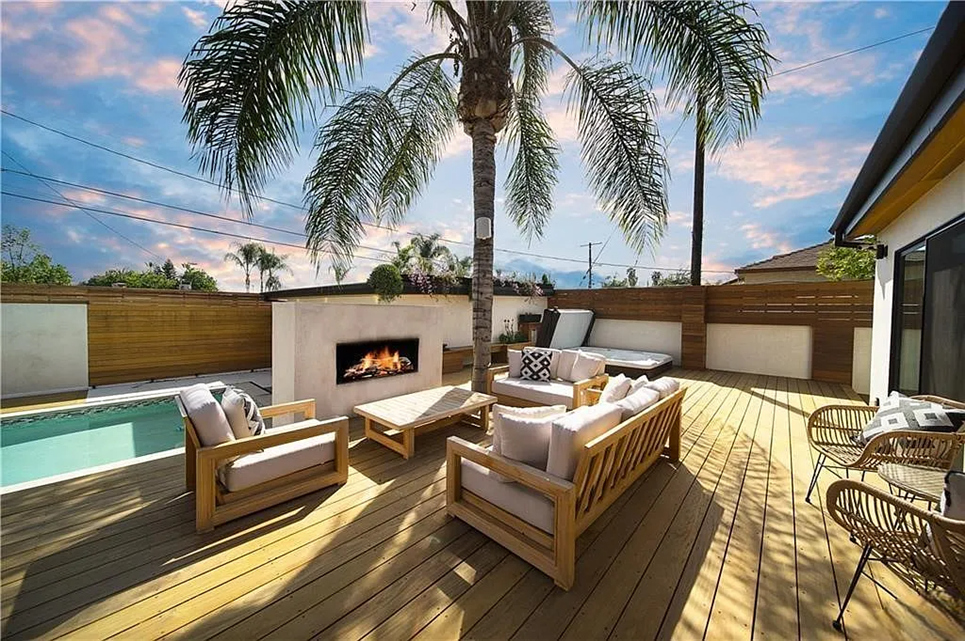
A functional layout sorts things out, like the pool area and a dining bit under cover. There is also that lounge zone with sofas and low tables, and maybe a fire feature or even a water wall to give your eyes somewhere to settle. Even on a smaller lot, the idea stays the same. You can mark the transition with a change in paving material, or a different ceiling height, or just a row of low planters, kind of like a divider without actually building a wall.
Evening lighting deserves real attention here, too. Miami’s outdoor living design opportunities extend well into the evening most of the year, and a backyard that’s well-lit at night feels like an entirely different space than one that goes dark after sunset. Grade-level path lighting, uplighting for palms and architectural walls, and pendant lights over the dining area all contribute something different.
Landscaping That Actually Does Something
The plantings around outdoor living spaces in Miami should earn their place. Ornamental plants that need constant irrigation don’t make much sense when you have native options that are genuinely adapted to the climate.
Sea grape, firebush, and coontie are plants that establish well in South Florida conditions and don’t require the maintenance that non-native ornamentals do. On the west and south sides of the yard, dense tropical plantings also work as wind buffers, which matters more than most people account for during hurricane season.
Privacy is the other function that landscaping handles well. Podocarpus hedges and certain bamboo varieties grow dense and tall quickly enough to screen neighboring lots without blocking cross-breezes, which matters in a hot climate where airflow is valuable.
For anyone working through new construction with Miami custom home builders, coordinating landscape planning early means the grading and drainage are sized the first time correctly. Drainage, especially, is one of those things that becomes very expensive to fix after the fact.
Code and Build Standards in South Florida
This part is less exciting but genuinely important. Miami-Dade County has some of the most demanding wind load requirements in the country, and they apply to outdoor structures the same as they do to the main house. Pergolas, covered lanais, outdoor kitchens with gas connections, shade sails with permanent anchors, all of it requires permits.
If you’re evaluating contractors and someone seems vague about the permitting requirements for outdoor structures, that’s a real red flag. Companies providing new home construction services in South Florida should know this process inside out.
Black Wall Builders is one example, combining experience in luxury residential construction across Miami Beach and other high-end neighborhoods with the expertise needed to manage both structural work and complex outdoor living projects.
FAQ
What outdoor living space ideas work best for Miami’s heat and humidity?
Shaded structures, heat-stable paving, and covered outdoor kitchens built for year-round use are the practical starting points. Travertine and porcelain pavers perform well in humidity and direct sun. A covered lanai or pergola with retractable shade extends usable hours significantly.
Native tropical plants reduce maintenance while handling Miami’s conditions without the irrigation needs that non-native ornamentals demand. Miami outdoor living design really comes into its own when shade is treated as a structural priority from the start.
How much does building outdoor entertainment areas in Miami typically cost?
Scope drives the number considerably. The covered patio with outdoor kitchen and some basic landscaping will usually start around $40,000 to $80,000. For high-end residential work, full outdoor living areas in Miami, including pool decks, built-in kitchens, lighting design, and custom tropical landscaping, start at a value of $150,000.
One of the reasons coordinating with Miami custom home builders as soon as possible helps is that putting together outdoor infrastructure at new construction is literally substantially less expensive to commit to than modifying it after the fact.
Do covered patios and pergolas require permits in Miami-Dade County?
They do. Covered patios, pergolas, outdoor kitchens with gas or electrical connections, and most structural additions require permits under Miami-Dade County code. Wind load compliance is a specific requirement given South Florida’s hurricane exposure, and the standards are strict. Contractors offering new home construction services in Miami should handle permit coordination routinely; it’s not something homeowners should need to navigate on their own.
What pool deck materials hold up best in South Florida?
Travertine and porcelain are therefore the most functional. Travertine is much cooler on the feet in direct sun than many concrete alternatives. Porcelain is denser, absorbs almost no water, and can withstand the moisture cycles that erode softer materials over time. Both are available in slip-resisting textures at the pool perimeter. These materials are not just aesthetic preferences that you find in Miami outdoor living spaces; they have been proven.
How do Miami custom home builders connect outdoor and indoor living areas?
The best way to do this is to start from design before any construction occurs. Location of doors, continuity in flooring or floor transition, and the relationship of interior to exterior ceiling heights are all choices that define how connected the spaces appear to be.
You are making more than simple, consistent, and repetitive sentences for the next paragraph or two. New homes construction companies in Miami will take care of this coordination as part of your complete residential build scope.