

Our homes are meant to be safe and comfortable spaces. However, tiny invaders often find their way inside through surprising entry points. One such area, frequently overlooked, is the garage door. This critical barrier, while protecting our vehicles and belongings, can also become a significant vulnerability for pest infestations.
Pests exploiting garage door gaps can lead to more than just annoyance. They can cause property damage, spread diseases, and compromise your home’s overall comfort and safety. We understand the unique pest challenges faced by homeowners in Billerica, MA, where seasonal changes heavily influence pest activity.
In this extensive guide, we will delve into how garage doors create potential pathways for pests. We’ll identify the most common seasonal pests that target Billerica garages and explain why effective pest control is essential. We will also explore professional pest management strategies to help you protect your home year-round. Understanding these local challenges is key to effective control, and for comprehensive local information, consider exploring resources such as this Biggins Billerica Pest Control guide.
The garage door, often the largest moving part of a home, serves as a primary access point for vehicles and storage. However, its very design, with moving parts and seals, inherently creates potential vulnerabilities that pests are quick to exploit. Worn-out garage door bottom seals, deteriorating weatherstripping, and gaps in the threshold are not just minor cosmetic flaws; they are open invitations for a myriad of unwanted guests.
Over time, exposure to the elements—Massachusetts’ harsh winters and humid summers—causes these seals to crack, shrink, or become brittle. A garage door bottom seal, for instance, is designed to create a tight barrier against the concrete floor. When this seal wears down, it creates tiny gaps—often just a quarter-inch high—that are more than enough space for mice, insects, and even small reptiles to squeeze through. Similarly, the weatherstripping around the sides and top of the garage door can peel away or become damaged, offering alternative entry points. Threshold gaps, where the garage floor meets the driveway, can also widen or crack, providing further access.
These structural integrity issues extend beyond pest entry. Gaps around your garage door significantly compromise your home’s energy efficiency. Conditioned air from your home can escape, and unconditioned air from outside can seep in, leading to higher heating bills in winter and increased cooling costs in summer. This constant exchange of air also means that moisture can enter, potentially leading to mold or mildew growth, which further degrades the structural components of your garage and creates an attractive environment for certain pests like cockroaches and silverfish.
From a home insulation perspective, a compromised garage door acts like a large, unsealed window, allowing heat transfer that affects not just the garage itself but also adjacent living spaces. This makes your home less comfortable and forces your HVAC system to work harder. The combination of easy access, potential moisture, and fluctuating temperatures makes the garage an ideal harborage point for pests seeking shelter, food, and water. Effective pest prevention, therefore, must begin at these critical junctures, addressing the physical vulnerabilities of the garage door to fortify the entire home’s perimeter.
Common Summer Pests Invading Massachusetts Garages
As we move into June 2026, the warmer weather in Massachusetts signals a surge in pest activity, and Billerica’s unique landscape, with its proximity to the Concord River, Nutting Lake, and various conservation lands, makes local homes particularly susceptible. Garages, with their often-cluttered spaces and direct access to the outdoors, become prime targets. Understanding the most common summer pests and their habits is crucial for effective prevention and control.
Here’s a look at some of the prevalent summer pests in Billerica and the risks they pose:
Common Summer Pests and Their Impact on Billerica Garages (June 2026)
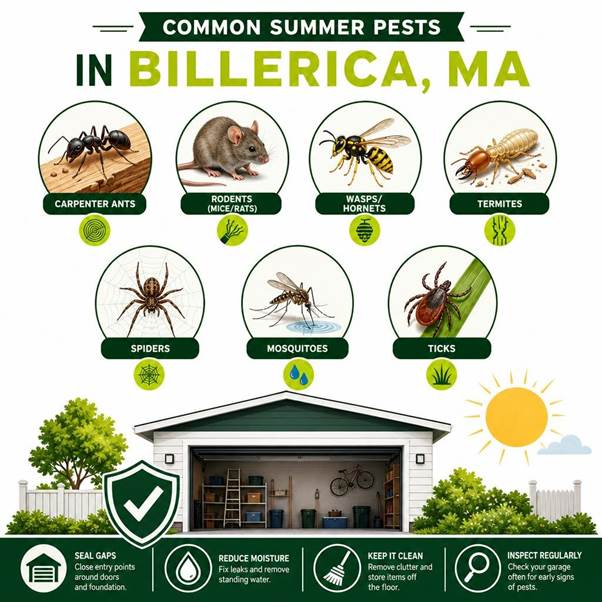
Carpenter Ants: These pests don’t eat wood but excavate tunnels for nesting, preferring moist, decaying wood. Garage doors and frames, especially if they have water damage, are prime targets. Their presence can be a sign of underlying moisture issues.
Rodents (Mice and Rats): Small gaps around garage doors, even those as tiny as a quarter-inch for mice, are easily breached. Once inside, they seek food, water, and shelter, often gnawing on electrical wires (a fire hazard), contaminating stored items, and damaging insulation. Their activity increases as they seek refuge from summer heat or later, from fall’s chill.
Wasps and Hornets: These stinging insects are highly active during the summer months, building nests in sheltered areas like garage eaves, attics, or even within wall voids accessible from the garage. While some wasps are beneficial predators, their presence near entry points poses a significant stinging hazard, especially for those with allergies.
Termites: Though active year-round, termite swarmers are often seen in spring and early summer, indicating a mature colony nearby. They can enter through foundation cracks or directly through wood-to-ground contact, silently causing extensive structural damage to the wooden components of your garage and home. For homeowners buying or selling, many lending institutions require a pest/termite inspection prior to closing, highlighting the seriousness of these pests.
Spiders: Garages provide ample hiding spots and a steady supply of other insects for spiders. While most spiders are harmless, some, like the black widow or brown recluse (though less common in Massachusetts), can deliver medically significant bites. Their webs are also a nuisance.
Mosquitoes and Ticks: While not typically nesting inside garages, open garage doors provide easy access. Mosquitoes breed in standing water, which can collect in forgotten buckets or clogged gutters around the garage. Ticks are often brought in by pets or people who have been in grassy or wooded areas, posing a risk of disease transmission like Lyme disease. The local environment of Billerica, with its abundant green spaces and water bodies, significantly contributes to the populations of these outdoor pests.
The fluctuating weather patterns of New England, from warm, humid summers to cold winters, mean that pest control in Billerica needs to be a year-round effort. Different pests thrive in different seasons, and cold weather often drives them indoors, making proactive measures and seasonal adjustments crucial for protecting your home.
Professional Pest Control Solutions for Garage Vulnerabilities
Addressing the vulnerabilities of your garage door and managing the array of pests that seek entry requires more than just DIY solutions; it demands a professional, strategic approach. This is where integrated pest management (IPM) comes into play, offering a comprehensive and sustainable solution for homeowners in Billerica, MA.