

Key Takeaways
- Florida heat, rain, humidity, and storm exposure should shape the selection process.
- Door material affects maintenance needs, appearance, weight, and resistance to dents or moisture.
- Insulation can improve comfort and reduce heat transfer, especially for attached garages.
- Wind and impact requirements depend on the property and local code conditions.
- The tracks, springs, opener, and installation are as important as the door panels.
Choosing garage doors in Florida involves more than matching a color or panel style. Heat, humidity, heavy rain, and hurricane-season wind can all affect how a door, its hardware, and its seals perform over time. Homeowners should begin with the practical needs of the garage, the home’s location, and applicable local requirements.
A garage may be used for vehicles, storage, a workshop, or exercise equipment. It may also sit beside bedrooms or below a conditioned living space. Those details influence the value of insulation, the preferred opener noise level, and the level of weather protection that makes sense for the opening.
Why Florida Conditions Matter
Sun exposure can heat the outside face of a door for hours, while humidity and wind-driven rain can reveal weak paint, damaged weatherstripping, and unprotected metal components. A garage connected to the house can also affect the comfort of nearby rooms. For a space used as a workshop or home gym, temperature, noise, and daylight may matter as much as curb appeal.
Comparing Garage Door Materials
No single material is best for every property. The right choice is usually the one that balances maintenance, appearance, strength, weight, and the conditions around the garage.
- Steel: A common option with many panel designs and insulated constructions. Surface damage should be repaired promptly to help prevent corrosion.
- Wood: Provides a traditional or custom appearance, but needs regular finishing and inspection in humid conditions.
- Aluminum: Lightweight and often used for contemporary designs, including doors with large glass sections. It can dent more easily than heavier steel.
- Composite or fiberglass: May provide a wood-like appearance with different moisture and maintenance characteristics. Compare the construction details and available repair options.
Choosing Insulation and Door Construction
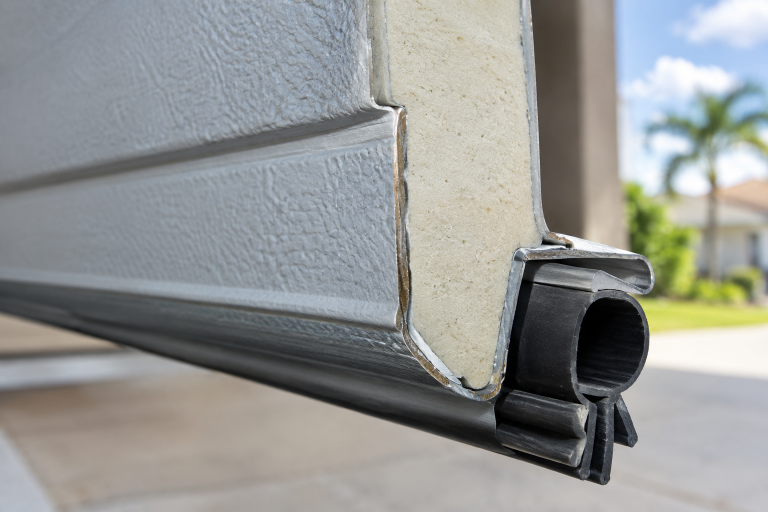
For attached garages, garages below living areas, and spaces used frequently during the day, insulation should be considered alongside the door material. R-value describes resistance to heat flow, but it is only one part of the result. Perimeter seals, the condition of the garage walls and ceiling, and installation quality also affect the space.
Single-layer doors generally have fewer layers, while double-layer and triple-layer doors can add backing material and insulation. An insulated door may also feel more solid and reduce some outside noise, but it will not cool a garage on its own.
Checking Wind and Storm Protection
A garage door is a large exterior opening, so its storm performance should be evaluated as a complete system. Florida’s guidance for protecting garage doors and other openings explains why wind and water entry can increase damage during severe weather.
- Wind-rated doors are evaluated for specified positive and negative wind pressures.
- Impact-rated doors are designed to address both wind pressure and debris-impact requirements where applicable.
- Tracks, hinges, rollers, brackets, fasteners, and anchors must match the approved door system.
- A heavy-looking door is not automatically suitable for a particular wind zone or opening size.
Before ordering, verify the applicable requirements with the local building department. Homeowners can also use Florida’s product approval search to review approved products and related documentation.
Matching the Door to the Home
Raised-panel, flush-panel, carriage-house, and modern glass designs can all work when they complement the home’s roofline, trim, siding, and windows. Consider how darker colors may absorb more sunlight and how windows affect privacy, interior light, and the storm-protection plan. Viewing physical samples outside can provide a more useful comparison than viewing colors on a screen.
Selecting an Opener
The opener should suit the door’s size, weight, and use pattern. Chain-drive models are often practical but may be noisier. Belt-drive units are commonly selected where the garage is close to the living space. Screw-drive and wall-mount options may fit certain layouts, particularly when ceiling clearance or overhead storage is limited.
Useful features include a battery backup, automatic lighting, remote alerts, a manual release, and functioning safety reversal sensors. A new door does not always require a new opener, but compatibility and lifting capacity should be confirmed before reusing an older unit.
Measurements and Maintenance
Measure the opening width and height, then check the headroom above the opening, the side clearance for the tracks, and the backroom for the open door. Pipes, lighting, storage racks, and ceiling obstructions can affect the selected track-and-opener setup. Even small measurement errors can create installation and operating problems.
Before the hottest months and again before storm season, inspect bottom and side seals, clear debris from the tracks, and look for loose hinges, worn rollers, rust, dents, or frayed cables. Test the opener’s reversal feature regularly. Springs and cables are under high tension and should not be adjusted without appropriate training.
A Simple Buying Checklist
- How will the garage be used day to day?
- Is it attached to a conditioned living space?
- Which material fits the maintenance plan?
- What insulation level is appropriate for the space?
- What wind-pressure and impact requirements apply?
- Will windows improve daylight without reducing privacy?
- Does the opener have suitable capacity and safety features?
- Does the written estimate identify installation, removal, adjustments, and final testing?
Conclusion
A well-chosen garage door should support daily use while accounting for Florida weather, the home’s design, and the needs of the space behind it. Comparing garage door materials helps homeowners weigh durability against corrosion and dent resistance, while insulation affects comfort in an attached garage. Storm ratings matter most in hurricane-prone areas, where impact resistance can protect the home during severe weather. Hardware quality influences long-term reliability and smooth operation, and accurate measurements prevent costly installation issues. Factoring in ongoing maintenance needs alongside these considerations helps homeowners make a more informed decision than choosing by appearance or price alone.