

The journey from raw land to a completed structure involves several critical phases, each building upon the last to create a stable and reliable foundation. This process begins with transforming the undeveloped landscape into a workable site.
Initially, land clearing is paramount. This involves removing all existing vegetation, trees, rocks, and debris that would impede construction. Following this, grubbing takes place, which is the removal of roots and stumps below the surface. This crucial step prevents future decomposition and settling, ensuring the long-term stability of the ground. Once cleared, mass excavation reshapes the terrain according to the project’s design, creating the necessary contours for foundations, utilities, and access roads.
A significant aspect of this phase is grading, which involves adjusting the land’s elevation to achieve specific slopes and levels. This is typically divided into rough grading and fine grading, each with distinct tolerances and purposes. Following grading, subgrade preparation establishes the foundational layer for pavement and building slabs. Throughout these earthwork activities, compaction testing is vital. We aim for specific densities, such as 95% Standard Proctor density for residential projects and 98-100% for commercial builds, to prevent future settlement and structural issues. Inadequate compaction can lead to voids beneath foundations, resulting in costly repairs later, potentially ranging from $30,000 to $150,000 or more after failure.
Moreover, preparing the ground for future surfaces, such as roadways and parking lots, requires specialized expertise. Proper Paving site preparation and infrastructure ensures that these surfaces are durable and long-lasting, capable of withstanding heavy loads and environmental stresses.
A critical safety consideration during this phase is the identification of existing underground utilities. Utility strikes are a serious concern, causing approximately 400,000 incidents annually in the US, often leading to project delays of 2-4 weeks. This highlights the absolute necessity of calling 811 before any digging commences to mark all underground lines.
Key Steps in the Site Preparation Process
The site preparation process is a systematic sequence of activities designed to create an optimal construction environment:
- Surveying: Accurate surveys define property lines, building locations, and elevation benchmarks, guiding all subsequent work.
- Demolition: If existing structures are present, safe and efficient demolition is carried out, with careful consideration for debris removal and recycling.
- Soil Stabilization: For sites with unstable soil conditions, various techniques like chemical treatment or mechanical reinforcement are employed to enhance bearing capacity.
- Erosion Control: Measures such as silt fences and sediment basins are installed early to prevent soil runoff and protect adjacent properties and waterways.
- Debris Removal: All cleared materials, demolition waste, and excavated soil are efficiently removed or repurposed on-site.
- Equipment Staging: Planning designated areas for heavy machinery and material storage optimizes workflow and enhances safety.
Differences Between Rough Grading and Fine Grading
While both rough and fine grading involve shaping the land, their precision and purpose differ significantly:
- Rough Grading: This is the initial, large-scale adjustment of the site’s elevation. It aims to achieve general slopes for drainage and approximate levels for building pads. Tolerances for rough grading are typically around ±0.2 feet. This phase often occurs after major earthwork and utility installations.
- Fine Grading: Following rough grading and utility installation, fine grading refines the surface to precise specifications, usually within ±0.1 feet. This meticulous work ensures proper surface drainage, prepares the subgrade for paving readiness, and creates the exact contours required for landscaping, sidewalks, and foundations. Assigning fine grading to the mass grading phase can lead to scheduling errors and costly rework.
Geotechnical Evaluation and Environmental Planning
Before any heavy machinery breaks ground, a thorough understanding of the subsurface conditions and environmental considerations is non-negotiable. This involves comprehensive geotechnical evaluation and meticulous environmental planning.
Soil borings and geotechnical testing are performed to analyze the soil’s composition, density, moisture content, and load-bearing capacity. This data is crucial for designing appropriate foundations and identifying potential challenges like expansive clays or loose sands. Understanding the site’s topography helps in planning effective drainage and earthwork strategies. Equally important is floodplain mapping, which identifies areas prone to flooding and informs design decisions to mitigate flood risks.
Effective stormwater management is a cornerstone of responsible site preparation. This includes designing systems to control runoff, prevent erosion, and protect water quality. For any land disturbance of 1 acre or more, an NPDES (National Pollutant Discharge Elimination System) Construction General Permit must be obtained before ground is disturbed, underscoring the regulatory importance of stormwater planning. Our experienced Foshee landscape grading contractors understand the critical role of precise grading in directing water away from structures and preventing erosion. This often involves the strategic placement of silt fences, rock check dams, erosion control blankets, and rip rap installation to manage water flow and sediment.
Assessing Soil Conditions and Flood Risks
The inherent characteristics of a site’s soil and its susceptibility to flooding significantly impact project design and cost:
- Soil Conditions: Different soil types present unique challenges. Expansive clay soils can swell when wet and shrink when dry, causing stress on foundations. Loose sand offers poor bearing capacity, requiring specialized foundation solutions. High water table depth can complicate excavation and necessitate dewatering efforts. Geotechnical reports provide crucial data to address these issues proactively.
- Flood Risks: Sites located in 100-year floodplains require specific design considerations, such as elevating structures or implementing robust flood barriers. Failure to account for these risks can lead to catastrophic foundation settlement and structural damage. In some cases, specialized solutions like helical piers may be necessary to provide deep foundation support in challenging soil or flood-prone areas.
Integrating Drainage and Stormwater Management
Proper drainage and stormwater management are not just regulatory requirements but essential elements for the long-term viability of any build. Our goal is to protect the structure from water damage, prevent erosion, and safeguard the surrounding environment. Key components include:
- Catch Basins: These collect surface runoff, channeling it into underground pipe systems.
- Retention Ponds: Designed to temporarily hold and slowly release stormwater, reducing peak flows and allowing for natural filtration.
- Culvert Installation: Used to convey water under roads or driveways, maintaining natural drainage paths.
- Slope Control: Carefully designed slopes direct water away from buildings and critical areas, preventing pooling.
- Runoff Mitigation: Employing various techniques to reduce the volume and velocity of stormwater runoff, such as permeable pavements or vegetated swales.
- Environmental Protection: All drainage and stormwater systems are designed to comply with environmental regulations, protecting local ecosystems from pollution.
Integrating Essential Site Infrastructure and Utilities
Beyond preparing the land itself, a successful new build hinges on the seamless integration of essential site infrastructure and utilities. This involves careful planning for everything from power and water to communication lines and transportation networks.
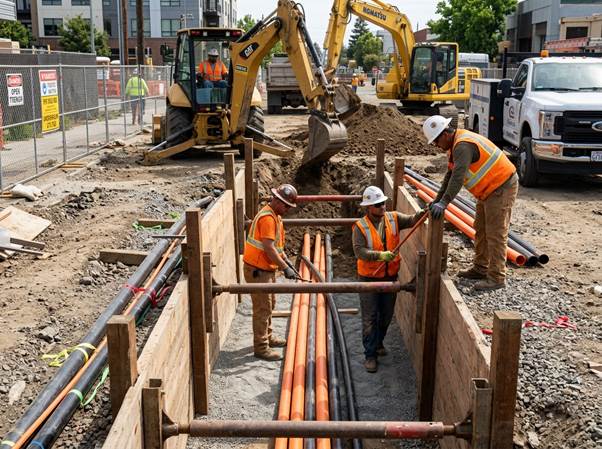
A primary concern is evaluating existing utility capacity. Can the local water, sewer, electrical, and gas grids support the demands of the new development? This often necessitates planning for sewer extensions and water main taps to connect to municipal systems. For larger projects, traffic impact studies are crucial to understand how the new development will affect local roadways and to plan for appropriate access. Pedestrian connectivity and multi-modal transportation options are increasingly important for sustainable community design.
Modern construction also relies heavily on specialized technologies for identifying and planning utility routes. Tools like ground penetrating radar and underground pipe locating equipment are indispensable for accurately mapping existing infrastructure, preventing costly and dangerous utility strikes. The overall site infrastructure, including considerations for Seamless HVAC site infrastructure, needs to be integrated into the initial planning to ensure efficient and effective operation of the building’s systems from day one.
Evaluating Utility Availability for Site Preparation and Infrastructure
Thorough utility assessment is a proactive measure that saves time and money:
- Capacity Assessments: Coordinating with local utility providers (electric, gas, water, sewer, telecommunications) early in the planning process is essential to determine if existing infrastructure can handle the project’s demands. Aging or overloaded infrastructure may require significant upgrades.
- Energy-Efficient Systems: Incorporating energy-efficient designs and technologies can reduce the overall demand on utility grids, potentially lowering connection costs and long-term operating expenses.
- On-site Water Storage: In areas with limited water availability or unreliable supply, planning for on-site water storage solutions can be a viable alternative.
- Grid Connectivity: Ensuring reliable connections to power and communication grids is fundamental for both construction operations and the future occupants of the build.
- Utility Easements: Identifying and respecting existing utility easements is critical to avoid legal issues and ensure uninterrupted service.
Planning for Traffic Flow and Road Access
Efficient traffic flow and well-planned road access are vital for both the construction phase and the long-term functionality of the site:
- Ingress and Egress: Designing clear, safe entry and exit points for construction vehicles, material deliveries, and future occupants.
- Heavy Equipment Paths: Designating specific routes for heavy machinery minimizes ground disturbance and ensures efficient movement across the site.
- Walkability and Bike Lanes: For residential or commercial developments, incorporating sidewalks, crosswalks, and bike lanes enhances safety, promotes healthy lifestyles, and contributes to a more livable community.
- Crosswalks: Properly marked and safe crossings are essential for pedestrian safety, especially in areas with significant vehicle traffic.
- Site Layout Optimization: Strategic placement of buildings, parking areas, and green spaces can significantly improve overall traffic flow and accessibility.
Managing Costs, Compliance, and Common Pitfalls
Navigating the complexities of site preparation and infrastructure demands a keen eye on budgeting, strict adherence to regulations, and an understanding of common pitfalls. These elements are crucial for avoiding delays, cost overruns, and potential legal issues.
One of the most significant cost variables in site preparation is rock excavation. While standard excavation costs typically range from $5-$15 per cubic yard, encountering rock can escalate costs dramatically, to $50-$200 per cubic yard – a 10 to 40-fold increase. This highlights the importance of thorough geotechnical investigations to identify such conditions early.
Beyond excavation, the overall costs vary significantly based on project scale:
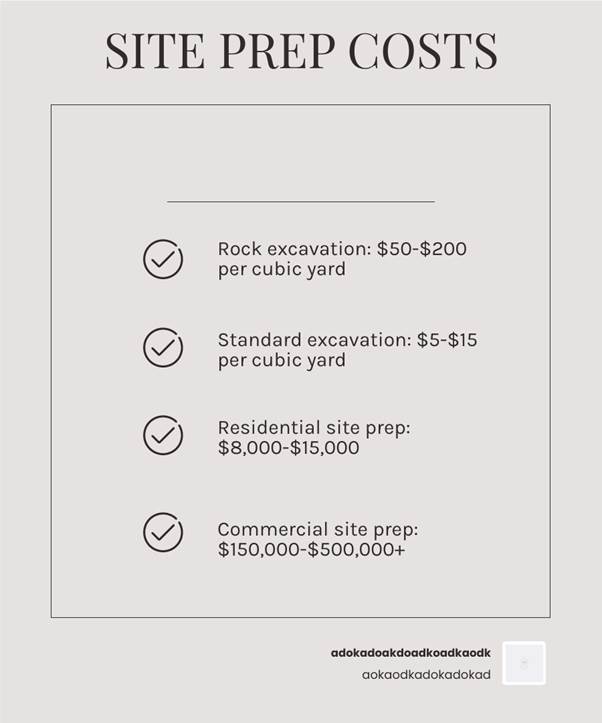
| Project Scale | Typical Site Prep Cost (Estimate, April 2026) | Key Factors Influencing Cost | Residential Site Prep Cost (Small) | $8,000 – $15,000 | Clearing, basic grading, utility connections for a single home. | | Commercial Site Prep Cost (Large) | $150,000 – $500,000+ | Extensive clearing, complex grading, extensive utility infrastructure, traffic management, larger scale. | | Land Clearing (per acre) | $2,000 – $6,000+ | Varies based on density of vegetation, terrain. |
Budgeting for Site Preparation and Infrastructure
Accurate budgeting is critical. We consider both direct costs and potential unforeseen expenses. Recent initiatives across the US highlight the strategic importance of early investment in site readiness:
- State Readiness Funds:Illinois designated $200 million in 2025 for site readiness.
- Ohio set aside $350 million (part of the $750 million All Ohio Future Fund) in 2024-2025.
- Pennsylvania allocated $400 million in 2024-2025 for its PA SITES program.
- Michigan’s Governor proposed $150 million for site preparation infrastructure. These investments underscore a growing recognition that prepared sites attract development, which, in turn, generates jobs and tax revenue.
- Cost-Benefit Analysis: While upfront costs for site preparation can seem substantial, a thorough cost-benefit analysis reveals that these investments prevent far more expensive problems down the line, such as foundation failures, utility strikes, or regulatory fines.
- Unexpected Rock Removal: As noted, discovering rock during excavation can drastically increase costs. Budgeting for contingencies, especially after initial geotechnical surveys, is crucial.
Best Practices for Site Preparation and Infrastructure Safety
Safety must be the top priority throughout all site preparation and infrastructure work. Adhering to strict safety protocols protects workers, the public, and the project timeline.
- Crew Training: All personnel must receive comprehensive training on equipment operation, hazard identification, and emergency procedures.
- Weather Monitoring: Constantly monitoring weather conditions and adjusting schedules accordingly prevents accidents related to adverse weather, such as heavy rain affecting soil stability or high winds impacting equipment.
- Protective Gear: Ensuring all workers wear appropriate Personal Protective Equipment (PPE), including hard hats, safety glasses, high-visibility clothing, and steel-toed boots.
- Trench Safety: Implementing strict trenching and excavation safety measures, including shoring, sloping, and regular inspections, to prevent collapses.
- Equipment Maintenance: Regularly inspecting and maintaining all heavy equipment ensures safe and efficient operation.
- Progress Monitoring: Utilizing technology like drones and GPS for continuous monitoring of site conditions and work progress helps identify potential hazards and ensure adherence to safety plans.
Frequently Asked Questions about Site Preparation
What is the difference between greenfield and infill site preparation?
The distinction between greenfield development and infill or redevelopment sites significantly impacts the scope and complexity of site preparation:
- Greenfield Development: This refers to building on undeveloped, raw land, typically outside urban areas. Site preparation for greenfield sites primarily involves extensive vegetation clearing, grubbing, and mass earthwork to establish basic infrastructure. Challenges often relate to remote access, lack of existing utilities, and untouched natural terrain.
- Infill or Redevelopment Sites: These are typically urban or suburban plots that have been previously developed. Site preparation here often includes demolition of existing structures, removal of legacy fill (old, potentially unstable or contaminated soil), and addressing contaminated soil from previous industrial uses. The process also frequently involves upgrading or rerouting existing utility upgrades. While smaller in area, infill sites can present complex challenges due to confined spaces, existing infrastructure, and environmental remediation requirements.
Why is soil compaction testing required every 500-1,000 square feet?
Soil compaction testing is required at intervals every 500-1,000 square feet to ensure uniform density and stability across the entire building footprint. This regular testing is critical for several reasons:
- Void Prevention: It confirms that no significant voids or loose pockets remain within the fill material, which could lead to uneven settlement.
- Foundation Stability: Achieving the specified compaction (e.g., 95% Standard Proctor density) provides a stable, load-bearing base for foundations, pavements, and other structures.
- Nuclear Density Gauge: Modern testing often uses a nuclear density gauge to provide immediate, accurate results on the field, allowing for quick adjustments during the compaction process.
- Settlement Mitigation: Consistent compaction across the site minimizes the risk of differential settlement, where different parts of a structure settle at varying rates, causing stress and damage.
- Structural Integrity: This rigorous testing is fundamental to the long-term structural integrity of the entire project, preventing future failures and costly repairs.
How do site preparation mistakes lead to foundation failure?
Site preparation mistakes are a leading cause of foundation failure, which can be incredibly costly and disruptive. The primary culprits include:
- Inadequate Compaction: If soil is not compacted to the required density (e.g., 95% Standard Proctor), it leaves voids and loose areas. Over time, the weight of the structure, combined with moisture changes, will cause this loose soil to settle, leading to uneven support and differential settlement. This can manifest as cracks in walls, uneven floors, and structural instability.
- Poor Drainage: Failure to design and implement effective drainage systems can lead to water pooling around foundations. This constant moisture can saturate the soil, reducing its bearing capacity, and in some cases, creating hydrostatic pressure against basement walls, leading to leaks or structural damage.
- Underestimated Soil Issues: Not properly identifying and addressing problematic soil types (like expansive clays) or high water tables during the geotechnical phase can result in foundations being built on unsuitable ground.
- Unidentified Utilities or Debris: Buried debris or unlocated utilities can create unstable pockets or obstructions that compromise the foundation’s integrity.
These mistakes can lead to major foundation repairs costing anywhere from $30,000 to $150,000+ after failure, underscoring that investing in proper site preparation is significantly more cost-effective than addressing the consequences of neglect.
Conclusion
The journey of any new construction project is inherently complex, but its foundation for success is undeniably laid during the meticulous process of site preparation and infrastructure development. As we’ve explored, from the initial clearing of land and precise grading to the comprehensive geotechnical evaluations and the strategic integration of utilities, each step is critical.
Proper site preparation ensures a solid foundation, leading to project predictability and significant risk reduction. It’s not merely about moving dirt; it’s a strategic investment that future-proofs your build against costly failures, delays, and regulatory challenges. By understanding the intricate details, adhering to best practices for safety and compliance, and making informed decisions based on thorough assessments, we can ensure that every new build stands strong, resilient, and ready for enduring construction success.